Deadly Sins: A Gothic-Inspired Font for Bold, Atmospheric Design
Understanding the Design and Purpose of Deadly Sins
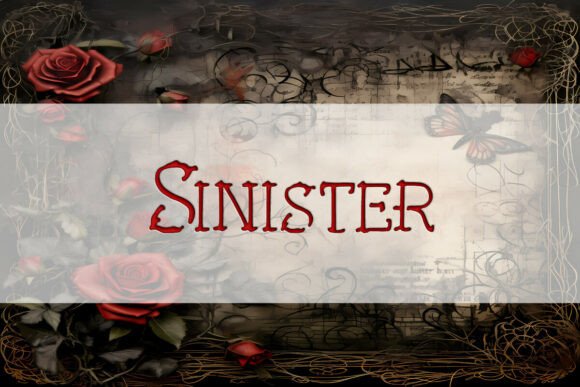
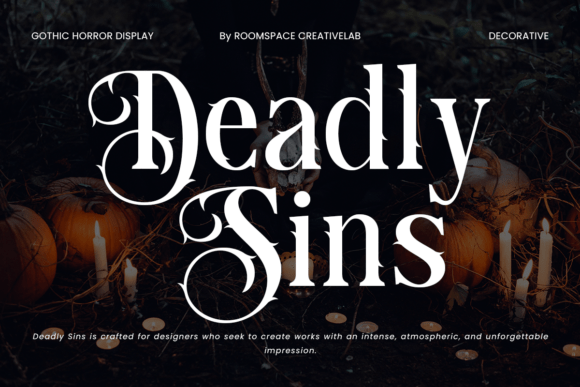
Deadly Sins is a display font rooted in gothic aesthetics, crafted for designers who need to convey intensity, drama, and a sense of the macabre. It stands apart from more conventional typefaces with its sharp serifs, deep curves, and decorative swashes that evoke a timeless sense of darkness and intrigue. While many fonts aim for clarity or minimalism, Deadly Sins embraces complexity and ornamentation, making it a compelling choice for projects that demand visual impact.
Unlike standard serif or sans-serif fonts designed for readability in long-form content, Deadly Sins is intended for short-form, high-impact applications. Its ornate structure makes it unsuitable for body text but ideal for titles, headers, and branding elements where a dramatic tone is desired. This deliberate focus on visual storytelling rather than functional legibility defines its niche and explains why it resonates with designers working in specific creative fields.
Key Features and Practical Strengths
- Sharp serifs and dramatic curves enhance the font’s gothic character.
- Decorative swashes and alternate characters allow for stylistic customization.
- PUA-encoded glyphs ensure easy access to all special characters in design software.
- Highly legible at large sizes, especially in print and digital graphics.
These features combine to give Deadly Sins both aesthetic appeal and practical flexibility. The inclusion of alternate characters and swashes enables designers to tailor the font to their specific project without needing advanced typographic knowledge. Whether used in a movie title sequence or a Halloween-themed poster, the font delivers a strong visual identity that’s difficult to replicate with more mainstream typefaces.
Real-World Use Cases and Performance
Designers working in branding, editorial design, and visual storytelling may find Deadly Sins particularly useful. For example, it performs well in:
- Motion graphics — especially for horror or thriller movie titles.
- Book covers — particularly in genres like dark fantasy, mystery, and gothic fiction.
- Event posters — Halloween events, gothic concerts, and themed parties benefit from its dramatic presence.
- Social media assets — dark-themed branding or seasonal campaigns can leverage its visual intensity.
In practice, Deadly Sins holds up well when used at larger sizes and in high-resolution formats. It maintains clarity and detail, even when scaled up for posters or banners. However, due to its intricate design, it may become difficult to read at smaller sizes or in low-resolution environments like mobile screens. This limitation reinforces the need for thoughtful application — not every design calls for such an expressive font, but when it works, it works powerfully.
Who Benefits Most from Using Deadly Sins?
Graphic designers, illustrators, and branding specialists who regularly work on dark-themed or gothic-inspired projects will find the most value in Deadly Sins. It’s especially useful for:
- Freelance designers needing to deliver unique, emotionally charged visuals for clients.
- Content creators producing seasonal or niche-themed digital content.
- Independent publishers crafting book covers or promotional materials for genre fiction.
- Small business owners in niche markets like tattoo studios, haunted attractions, or alternative fashion.
For these users, Deadly Sins offers a way to stand out visually without relying on overused fonts. It supports a strong visual identity and helps communicate tone and atmosphere at a glance. However, it may not be the best fit for more neutral or mainstream branding efforts, where subtlety and readability are key priorities.
Quality and Usability Considerations
From a technical standpoint, Deadly Sins is well-constructed. The PUA encoding ensures that all alternate characters and swashes are accessible without requiring special software or advanced typographic tools. This level of usability is important for designers who may not be deeply familiar with OpenType features but still want to customize their typography.
Consistency across characters is strong, and the font maintains its stylistic integrity throughout the glyph set. Kerning and spacing are handled with care, which contributes to its readability in display applications. While it’s not intended for long blocks of text, its performance in titles, logos, and headers is reliable and visually cohesive.
Potential Limitations and Recommendations
Despite its strengths, Deadly Sins isn’t a one-size-fits-all solution. Its ornate nature means it can easily overwhelm a design if not used with restraint. Pairing it with overly decorative or similarly styled fonts can lead to visual clutter. A better approach is to balance it with simpler, more neutral typefaces to ensure clarity and hierarchy.
Additionally, because of its gothic roots, it may not be appropriate for projects that require a modern, minimalist, or corporate aesthetic. Designers should also be mindful of licensing terms — while many commercial-use fonts are available, it’s important to verify permissions before using Deadly Sins in client work or for mass distribution.
Final Thoughts: When Deadly Sins Fits the Project
For designers looking to evoke a sense of darkness, mystery, or elegance with a sinister edge, Deadly Sins offers a compelling typographic solution. It's a well-crafted font that delivers both visual impact and practical usability, especially in niche creative markets. Whether you're designing a book cover, event poster, or brand identity for a gothic-inspired product, Deadly Sins can help you achieve a memorable and atmospheric look.
However, like any specialized tool, it shines brightest when used with intention. Understanding its design intent, technical features, and visual impact will help ensure it enhances — rather than distracts from — your creative work.